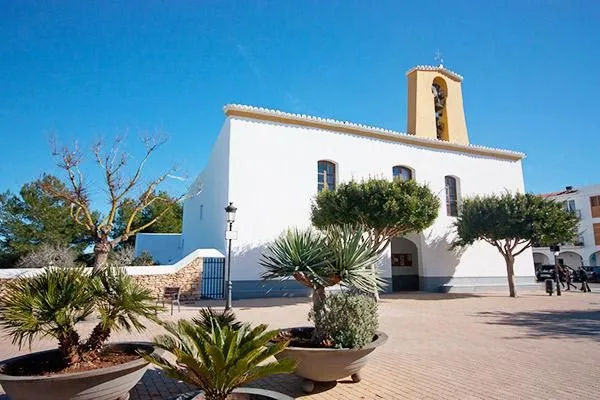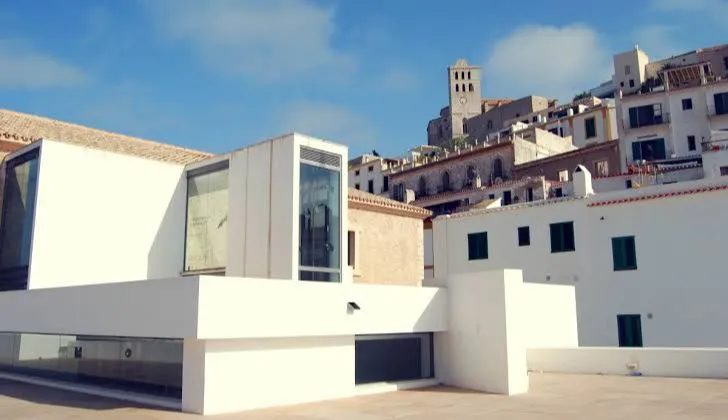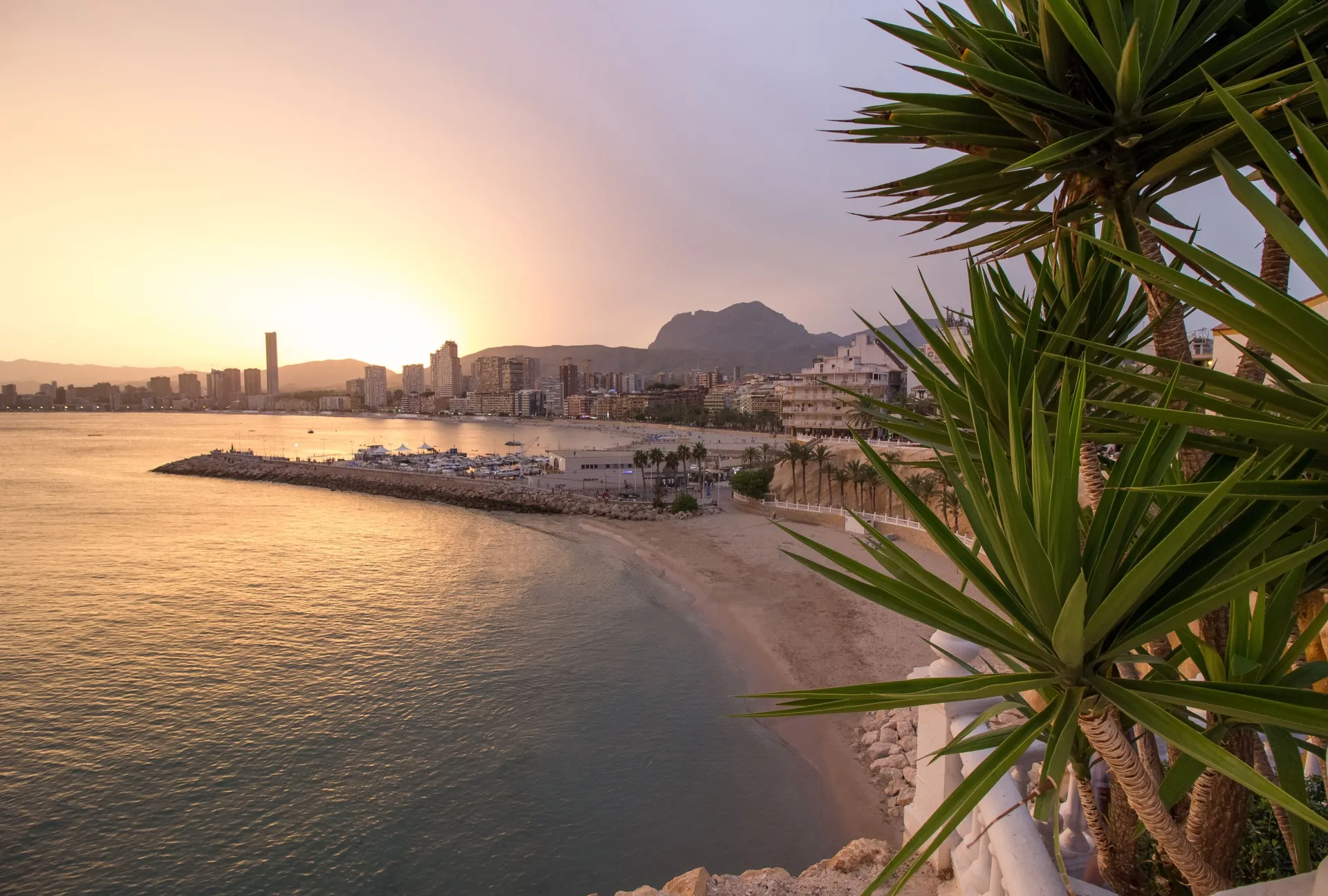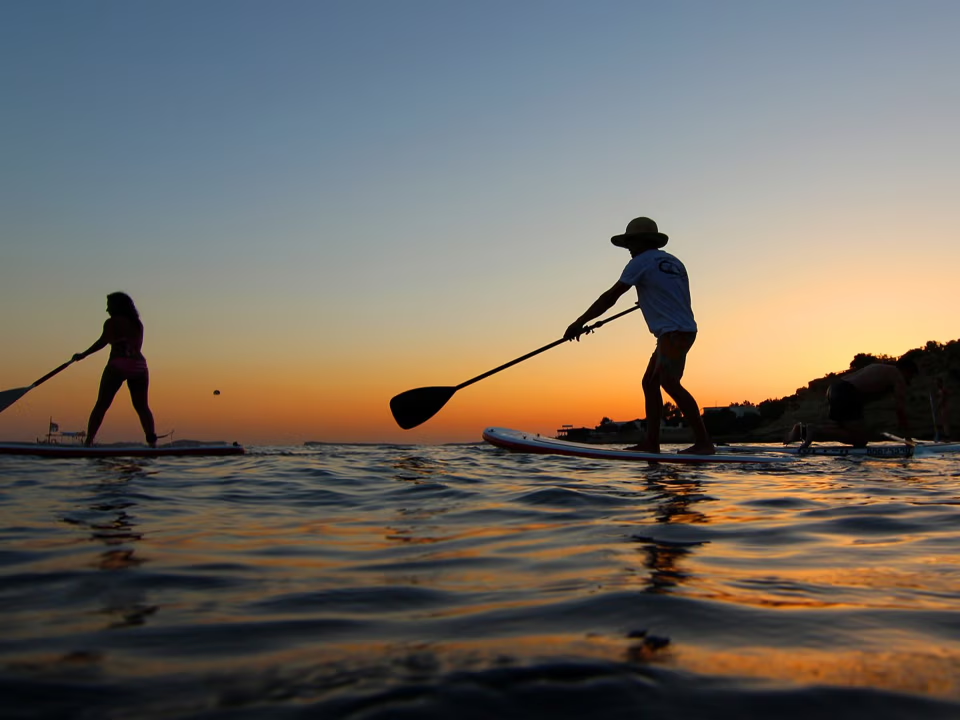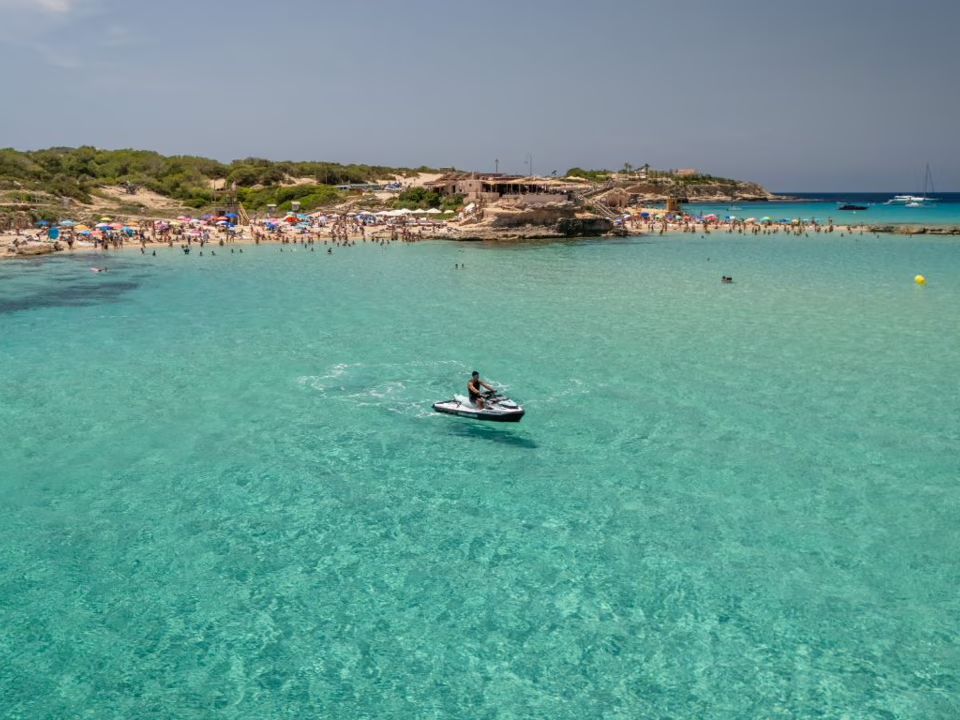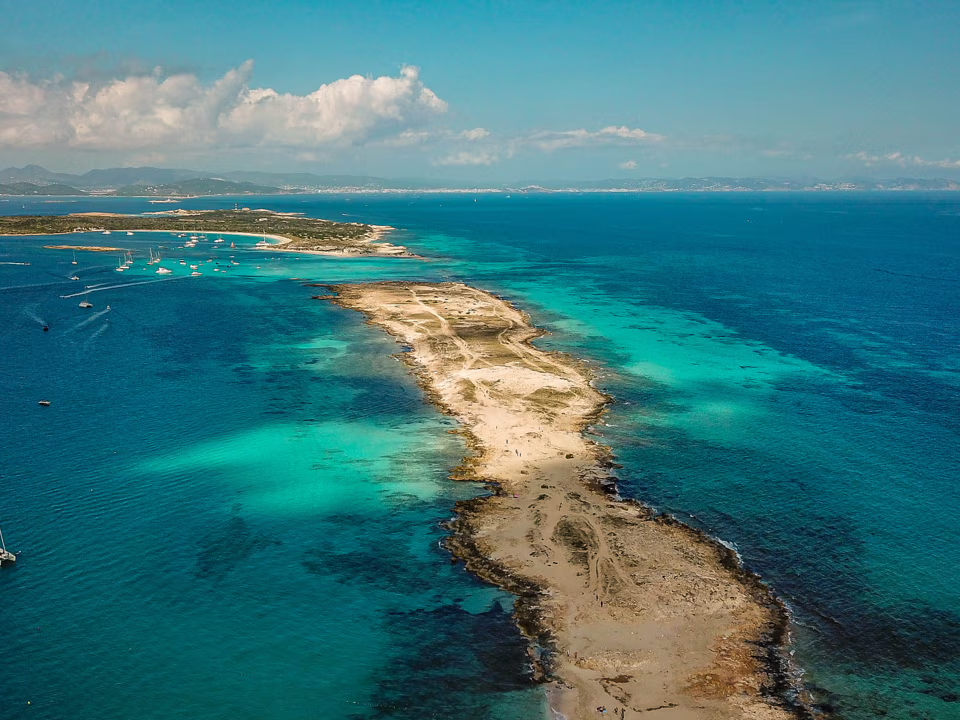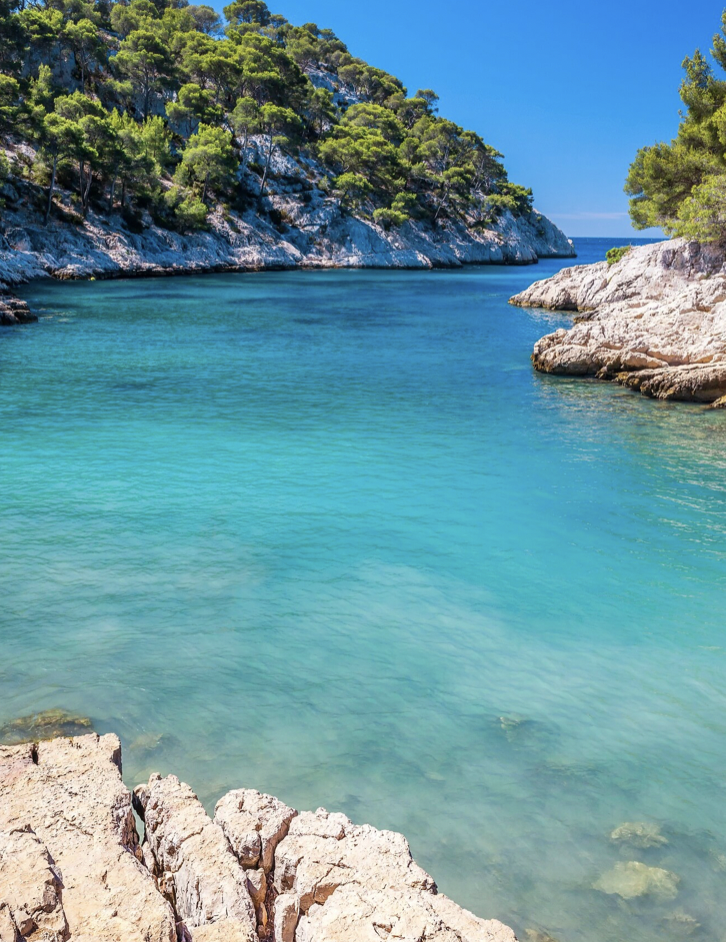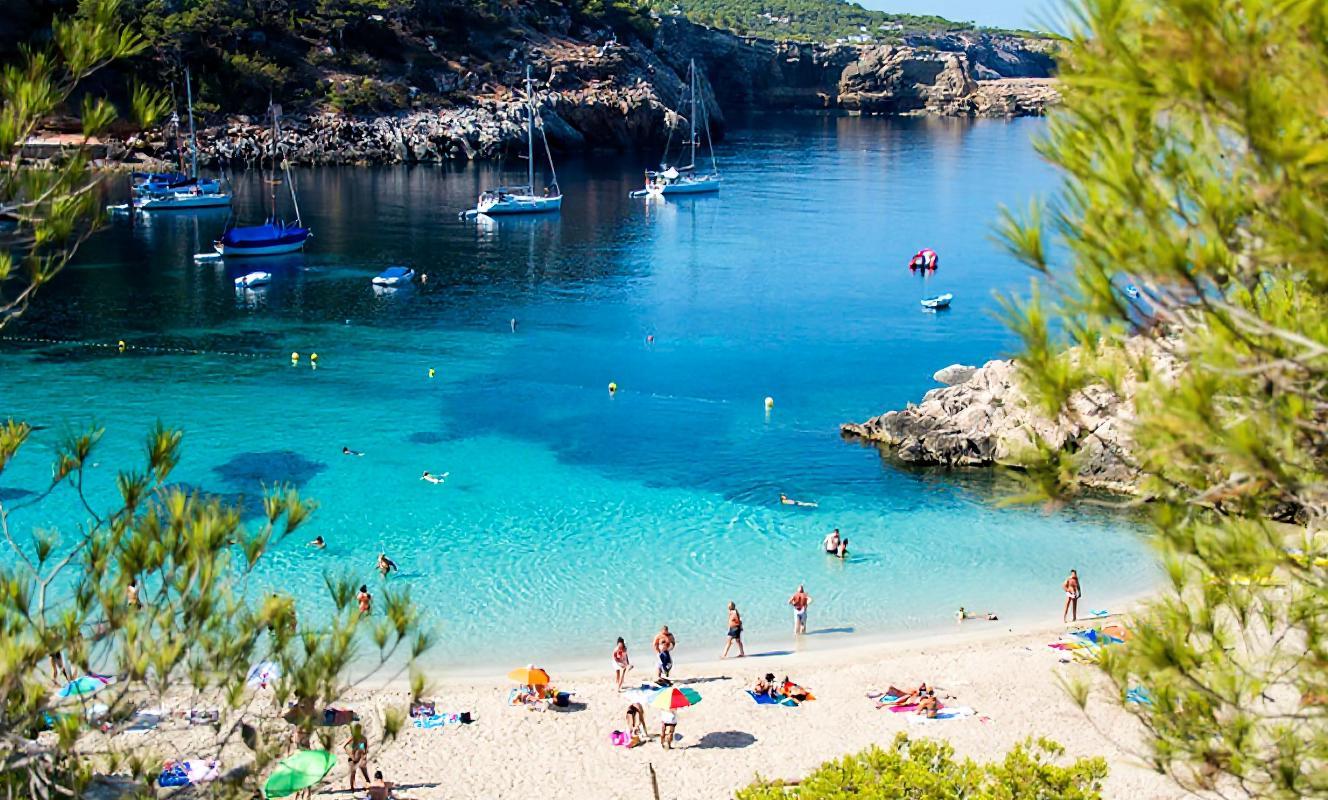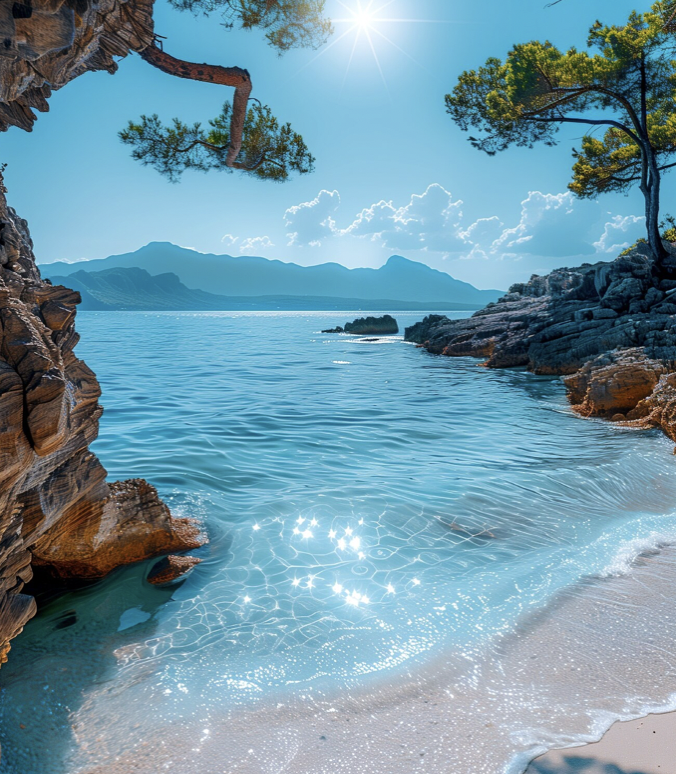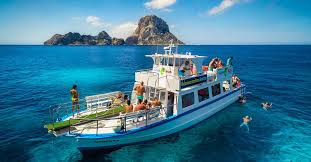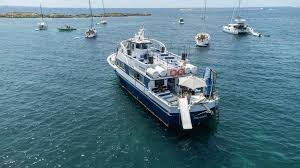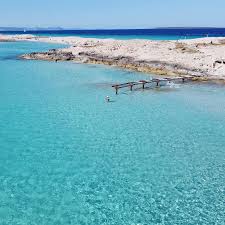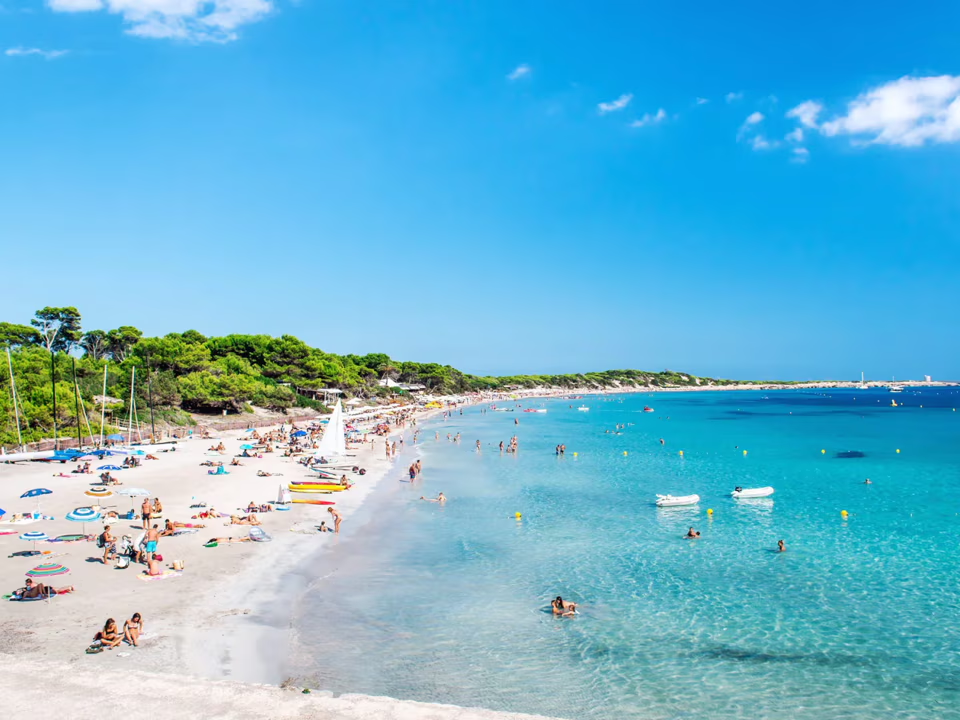
These are the 12 best Ibiza drone photography spots and shot ideas:
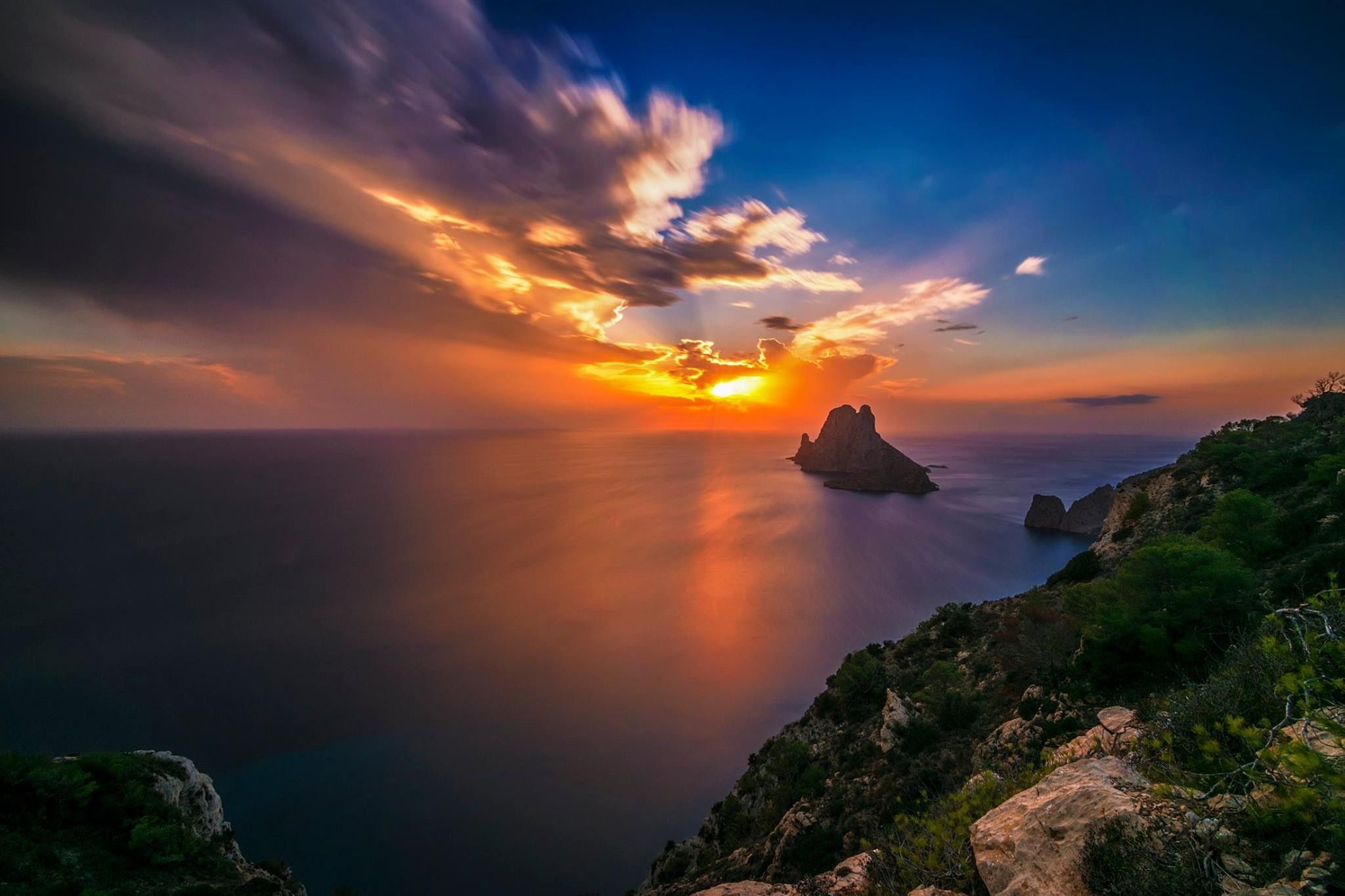
Es Vedrà and Es Vedranell.
Atlantis at Sa Pedrera.
Punta Galera.
Cala Comte.
Dalt Vila.
Cala d’en Serra.
Cap Blanc.
Cala Vadella.
Puig des Molins.
Torre des Savinar.
Time and Space near Cala Llentia.
Cala d’Albarca.
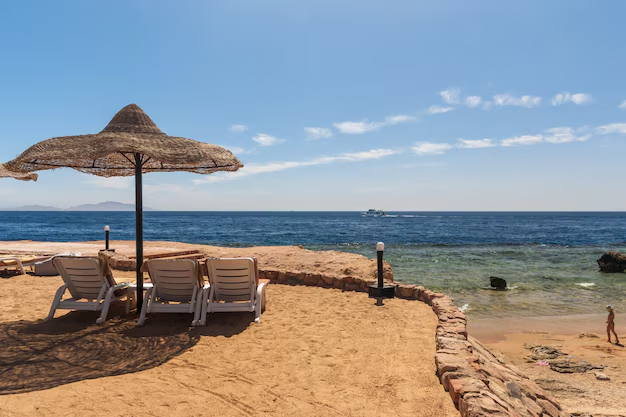
Ibiza gives photographers plenty to work with: pale cliffs, dark rock shelves, turquoise shallows and old stone against the sea. The interesting part is choosing what you want to show, whether that’s the shape of a bay, a landmark on the horizon or the shadows across a sculpture.
These 12 locations are subjects to research, not a list of cleared drone launch sites. Some involve protected landscapes, sensitive wildlife, urban surroundings or airspace restrictions. If flying isn’t permitted or suitable for your visit, many still offer rewarding photographs from an authorised ground-level viewpoint.
Clubtickets can help you plan the sightseeing and other experiences around your photography. Drone operation needs its own checks and any required permissions; booking a tour or boat trip doesn’t authorise a flight.
12 Ibiza locations for your photography shortlist
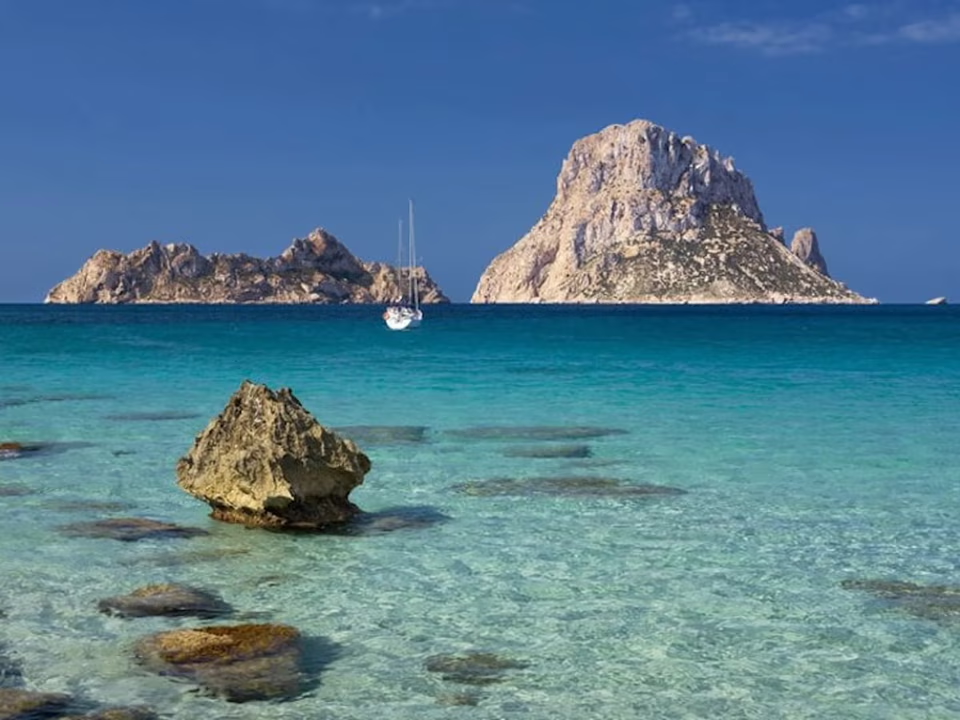
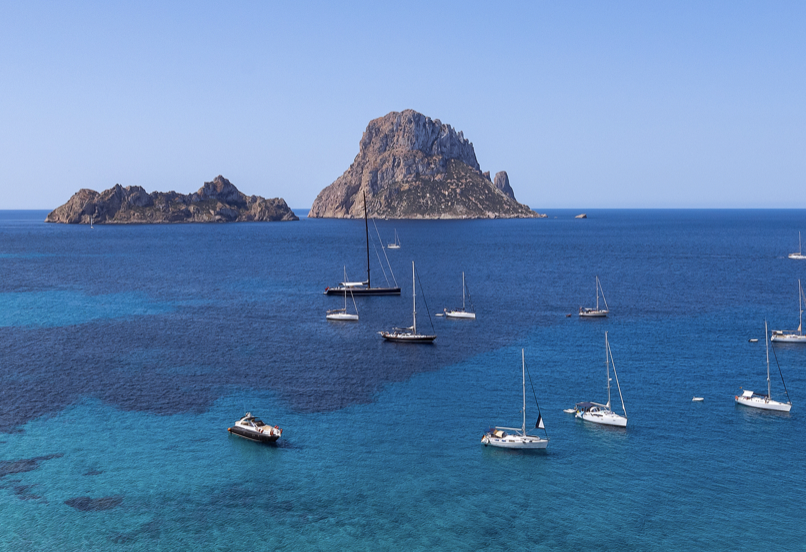
1. Es Vedrà and Es Vedranell
The offshore forms of Es Vedrà and Es Vedranell create one of Ibiza’s most recognisable coastal views. A simple composition can be more effective than trying to include the entire coastline: a clear outline, a little foreground and enough space around the rocks to show their setting.
Late light can produce a silhouette, while other conditions may reveal more texture in the stone. Choose the effect you want rather than assuming sunset is always the best moment. Haze and cloud can change the scene considerably.
Treat the protected islets and surrounding area as a sensitive setting. Don’t take a viewpoint’s popularity as approval to launch or fly towards the islands. A photograph from a lawful viewpoint with a longer lens can give the landmark scale without a flight.
2. Atlantis at Sa Pedrera
Sa Pedrera’s quarry-cut rock offers lines, surfaces and patterns that make it an interesting photographic subject. Here, a smaller detail can be more distinctive than a broad coastline shot. Look for light revealing the difference between carved stone, shadow and water.
The mainland coastal site known as Atlantis is not beneath Es Vedrà itself. Plan access independently of the island viewpoint, and check current local arrangements before visiting. It shouldn’t be treated as a quick detour with a heavy equipment bag.
Avoid using a drone to compensate for uncertain access or to explore beyond where you can maintain the necessary sight of it. If the visit doesn’t work for your group, choose another coastal subject and keep Sa Pedrera for a properly planned occasion.
3. Punta Galera
Punta Galera’s layered rock shelves give you strong lines without needing a complicated composition. Look at how the ledges repeat, where the water breaks the pattern and whether the horizon adds anything to the image.
Side light can make the rock structure stand out. From a suitable public position, a ground-level frame across the shelves can show depth that a top-down image loses. Try a few different viewpoints before deciding an aerial perspective is necessary.
The rock platforms are used by visitors, so plan around people’s space and privacy. A less crowded moment may improve the picture, but it doesn’t remove the need to establish flight permissions or make the footing straightforward.
4. Cala Comte
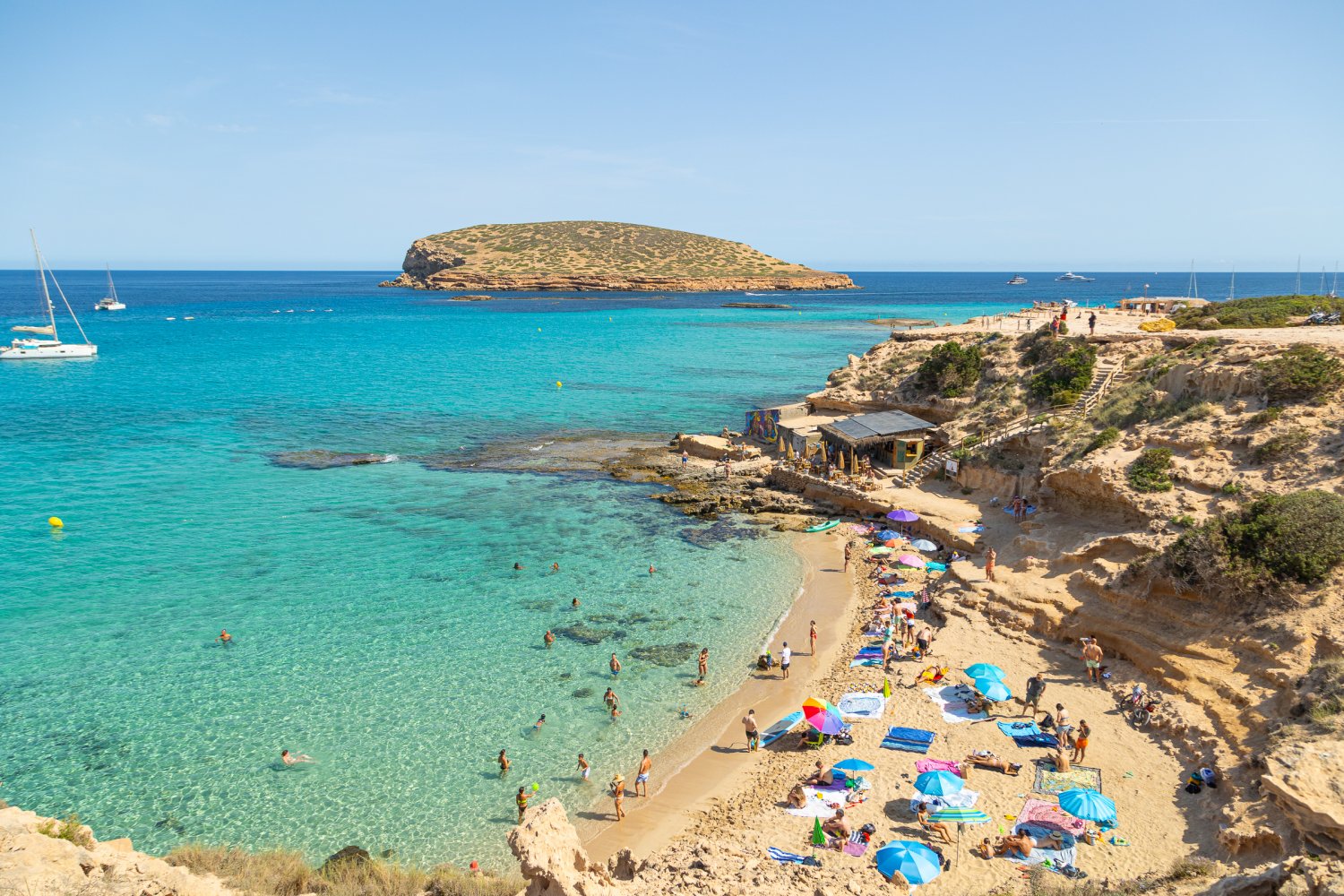
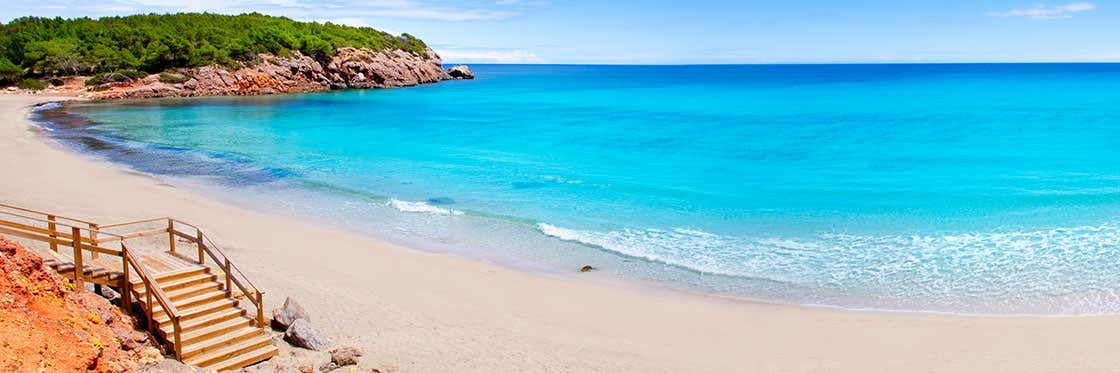
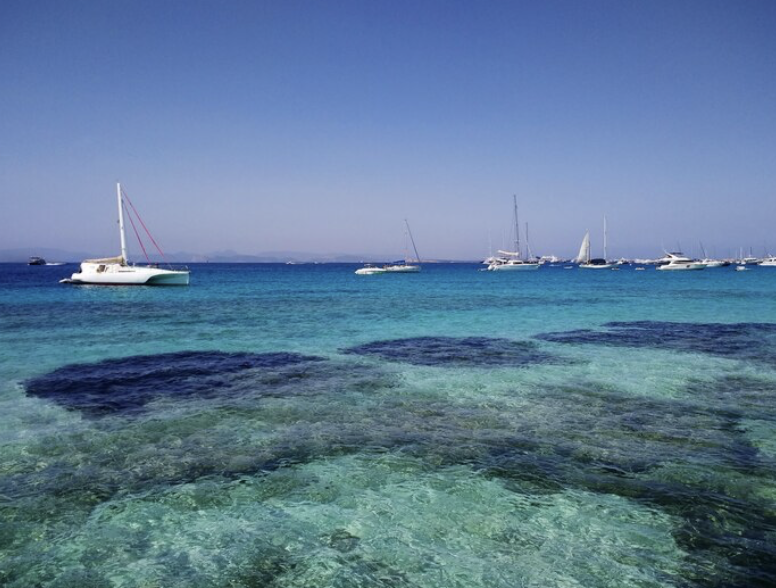
Cala Comte offers colour contrasts between sand, rock, shallows and the islands offshore. Decide whether you’re making a picture about the water, the coastline or the sunset. One clear subject usually gives a stronger result than fitting everything into a single frame.
Brighter light can help reveal changes in water colour; lower light can bring warmth and longer shadows. The effect depends on cloud, sea conditions and your direction of view. Don’t promise yourself a particular shade of turquoise before you arrive.
Use the Cala Comte beach guide to plan the visit around time on the coast, not just a flight. Research the beach, nearby islets and complete proposed route separately, and avoid treating a busy beach as a convenient launch area.
5. Dalt Vila
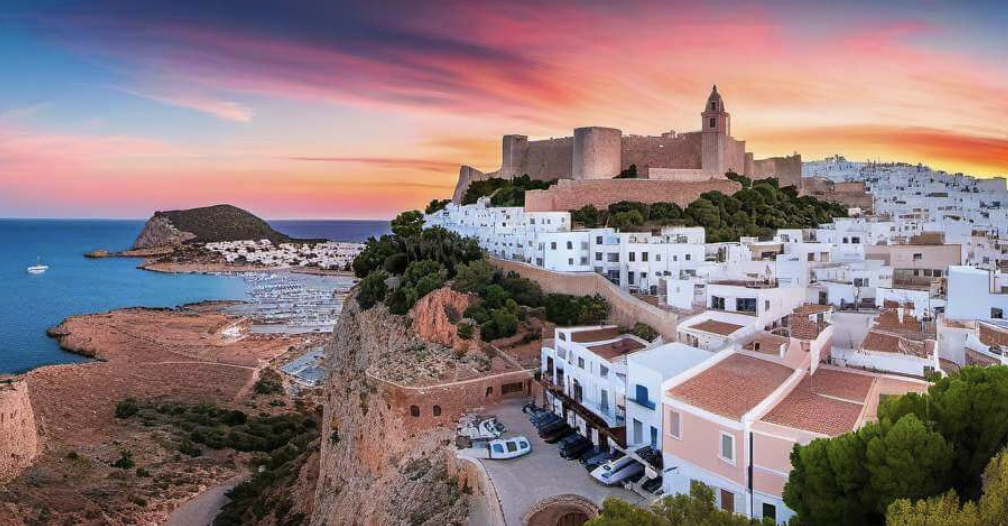
Dalt Vila offers stone walls, streets and harbour views that reward a slower approach. Look for an angle that explains the relationship between the old town and the sea, rather than trying to reproduce a familiar aerial panorama.
Urban airspace, nearby aviation activity, visitors and the historic setting make this a place for careful advance research. A proposed flight alongside the walls needs much more than a clear camera view. Don’t arrive expecting to improvise it from a square.
There are plenty of ways to explore Ibiza Town with a camera at ground level. Doorways, shaded lanes and views from permitted public areas can give you a varied series while leaving the drone packed away.
6. Cala d’en Serra
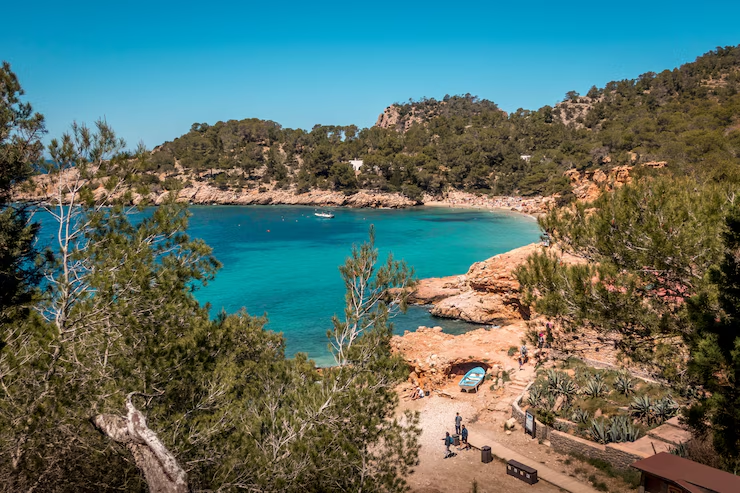
The curve of Cala d’en Serra’s bay and its surrounding slopes make a natural subject. Try to show what gives the cove its shape: the opening towards the sea, the meeting of rock and water or a contrast between sunlit and shaded areas.
Build the composition around the landscape rather than relying on the unfinished building seen in older photographs. Its site has been subject to demolition and restoration plans, so old images don’t establish what you’ll find or where you can go now.
Check current access and any works before travelling, stay outside closed areas and assess the flight requirements independently. If the access or conditions don’t suit the day, a different northern coastal stop can be the better choice.
7. Cap Blanc
Around Cap Blanc, the coastline offers opportunities to work with rock, the sea and the edge of the land. An image looking along the shore can explain the setting better than a very wide view with no clear point of interest.
The aquarium and its cave setting are separate visitor spaces, not a reason to fly into a cave or close to its entrance. Ask the attraction about ordinary photography where relevant, and keep a drone plan separate from an admission ticket.
Avoid low passes near cliffs, people or wildlife simply because they look dramatic. A still image from a suitable coastal viewpoint, with attention to the light and the horizon, can deliver the sense of place without a moving aerial shot.
8. Cala Vadella
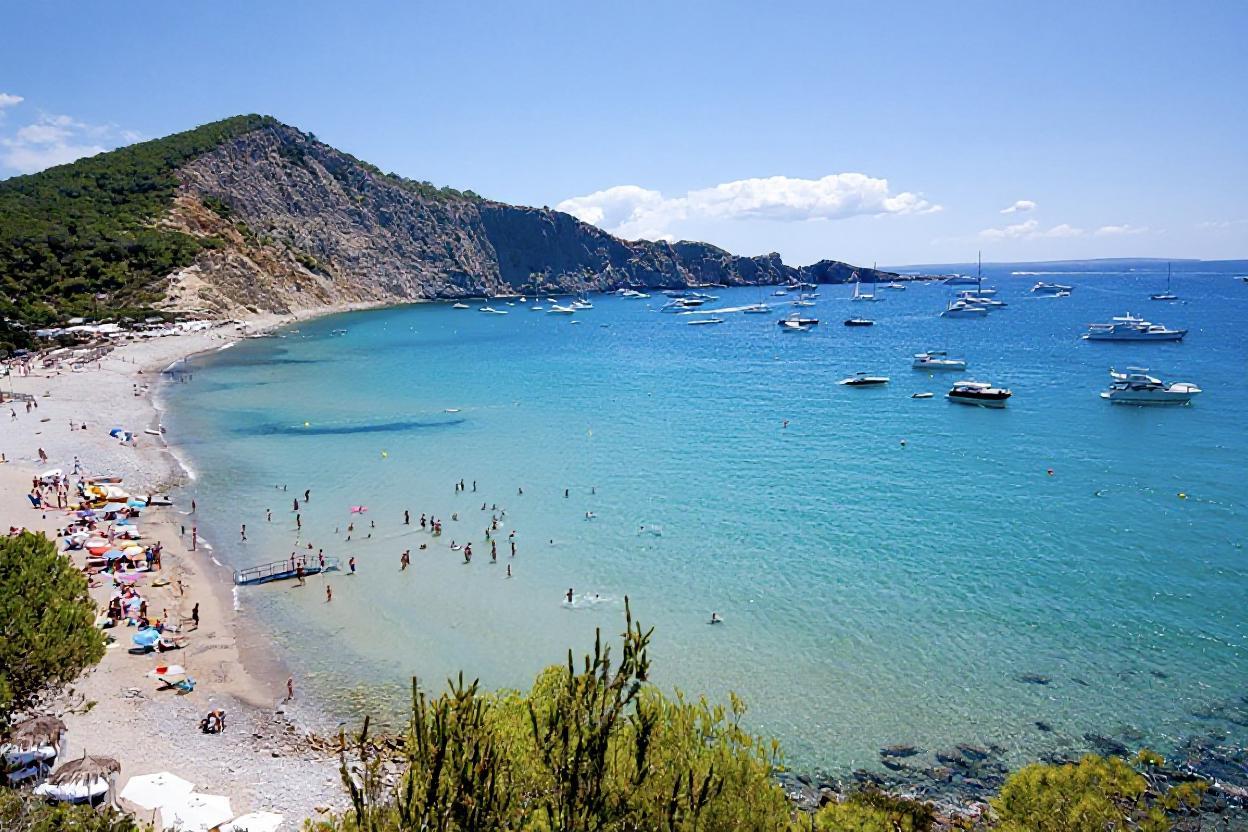
Cala Vadella gives you a curved shoreline with a developed beach setting and boats that may form part of the scene. A more selective composition can show the bay without turning every person and vessel into a subject.
This Cala Vadella beach article offers context for an ordinary visit. Plan lunch or beach time alongside the photography, then establish access and flight conditions separately. The bay’s shape doesn’t guarantee still water or little wind.
Moored boats are occupied spaces, not props for a close orbit. Think about privacy and separation from people on the shore and water. If the frame depends on being very close to somebody else’s holiday, choose another angle.
9. Puig des Molins
Puig des Molins adds an archaeological subject to a collection otherwise dominated by beaches and cliffs. A visit can focus on the historic setting and the relationship between the site and the town, with the museum helping provide context.
Use visitor routes and ask the site about photography conditions. Historic remains shouldn’t be used as launch pads, and areas outside the public route aren’t automatically accessible because they appear open in an image.
For an aerial project, establish the heritage permissions and relevant urban and airspace conditions before arranging the visit around it. For a holiday afternoon, a permitted museum and ground-level photography plan can be more rewarding than pursuing an unconfirmed flight.
10. Torre des Savinar
Torre des Savinar can bring a recognisable foreground into a view of the southwest coast. Think about how much space the tower needs in the frame and whether the background supports it or competes for attention.
An elevated viewpoint can already provide a sense of scale. You may find that a ground-based image has the depth you wanted from a drone, especially when the tower, landscape and horizon line up well.
Check present access, property boundaries and the protected-area requirements. The tower’s height and position don’t establish a suitable launch site. Don’t use its structure, a cliff edge or a restricted approach as part of an improvised operation.
11. Time and Space near Cala Llentia
Andrew Rogers’ Time and Space installation near Cala Llentia provides a different visual subject: repeated columns, vertical shapes and changing shadows. A low viewpoint can emphasise the columns against the sky, while a wider frame places the work in the coastal landscape.
Look at what the light is doing before settling on a top-down concept. The shadows and spaces between the columns can be interesting subjects in their own right. You don’t have to show the whole installation to make a photograph that feels distinctive.
Respect the artwork and the conditions of access. Permission to walk to a location doesn’t automatically include permission to launch a drone or carry out a production. Use only areas where the visit and any intended activity are permitted.
12. Cala d’Albarca
Cala d’Albarca’s rugged northern coastline offers scale, rock and a strong relationship between land and sea. Choose one element to lead the frame, rather than assuming the most remote viewpoint will produce the best photograph.
Access can be a significant part of the outing, so check the route and conditions before committing to carrying equipment there. Distance from resort areas is not evidence of unrestricted airspace, dependable signal or an empty landscape.
For any authorised operation, keep the proposed flight within the conditions you can actually meet, including visual line of sight. Don’t plan to disappear behind a headland to reveal a feature you can’t see from your position. A shorter, simpler shot is the better result when it keeps the plan workable.
What to check before choosing a drone location
Start with the flight area rather than the photograph
Use the official ENAIRE Drones map to research the complete area you intend to use, including the route and height. Read the notices and conditions for each relevant zone. A quiet beach, an offshore position or a drone app allowing take-off doesn’t establish permission.
Check again close to the operation, and complete any required coordination or authorisation beforehand. A map is a planning tool, not an approval document. Land access and permission to launch from a property are separate from the conditions governing the airspace.
Match the rules to your drone and operation
Consult AESA’s open-category information for the requirements that apply. A camera-equipped drone under 250 grams is not automatically exempt from operator registration; the toy exception and your actual equipment matter.
Check the relevant training, equipment, registration and insurance conditions rather than using weight alone. If you’re already registered in another country, establish the applicable visitor procedure instead of assuming you need a duplicate Spanish registration.
Under the general open-category framework, flights must not pass over assemblies of people; separation from individual bystanders depends on the drone and subcategory. Plan to maintain visual line of sight and normally stay within 120 metres of the closest point of the earth’s surface. Local limits may be lower. A cliff-top launch doesn’t provide another 120 metres beyond that terrain-based limit.
Check environmental protection separately
The Balearic government’s drone-filming guidance for environmentally protected areas distinguishes different protection designations and procedures. An aerial shot for personal use is not automatically outside those requirements.
Identify the status of the actual flight area and ask the relevant authority about the procedure. Marine protected areas can also involve a different responsible authority. Keep wildlife, privacy, people and site access in the plan alongside the airspace check.
Light and camera settings that suit the scene
Choose the light for the photograph
Soft morning light can work well for stone, architecture and gentle colour. Later light can give the west coast warmth or turn a landmark into a silhouette. Stronger daylight may help separate shallow water from darker patches, though glare can become part of the challenge.
None of those periods guarantees suitable flying conditions. Check the weather, the actual wind and the conditions expected during the operation. A sheltered place to stand can feel very different from the air above the coast.
Use these Ibiza sunset locations as landscape ideas, rather than flight recommendations. Planning a ground photograph around the light can make for a lovely evening even when the aerial idea stays on the drawing board.
Keep exposure and colour consistent
Where your camera allows it, a fixed white balance can keep a short sequence looking consistent. Protect bright areas such as pale stone and reflections, and review the image rather than relying only on a small screen in strong sunlight.
For video, choose a frame rate and shutter approach that suits the footage you want to make. ND filters can help control exposure when you’re aiming for a particular shutter speed. A flat colour profile is useful only if the camera supports it and you’re comfortable grading the result.
For stills, prioritise a sharp, well-composed image over copying someone else’s video settings. Check your camera’s capabilities before the trip, and practise ordinary controls somewhere appropriate so that the location doesn’t become a technical lesson.
Let the composition carry the image
One shoreline, one foreground feature or one clear arrangement of shadows can be enough. Avoid unnecessary movement just to make the shot look more complicated. A stable frame can give the viewer time to appreciate what attracted you to the place.
For an authorised flight, plan only movements that fit the approved conditions and your ability to observe the aircraft. Don’t let a camera move determine the operation after you’ve already taken off.
Plan a photography day you’ll enjoy
Choose one main area instead of attempting all 12 locations in a short visit. The southwest coast, Ibiza Town and the north are different days. You’ll get more from the light if you aren’t spending the best part of it travelling to the next stop.
Check Ibiza’s seasonal weather, then use a current forecast and observations for the actual day. Plan time for walking, lunch, charging and returning to your base. Keep a ground-based alternative so the outing still feels worthwhile if flying isn’t suitable.
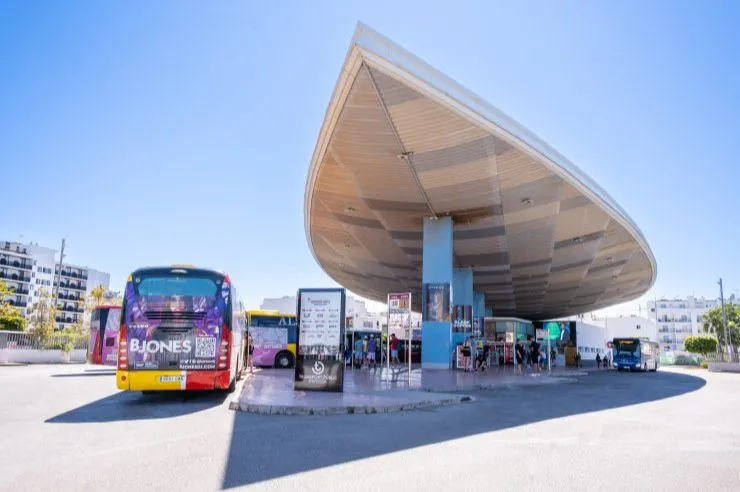
If a Clubtickets outing shares the day with photography, work around its meeting point and fixed start time. These Ibiza bus routes can help with some journeys, but check the final stop, walk and return service before setting off with equipment.
What to pack and prepare
Your drone, controller and suitable spare batteries, with manufacturer and airline instructions checked.
Charged equipment, sufficient storage and a copy of the documents relevant to the operation.
Any permissions or coordination confirmations, saved where you can retrieve them.
Appropriate filters and a clean lens cloth, without carrying accessories you won’t use.
Water, sun protection and footwear suited to the route you’ll actually take.
A camera or phone for a ground-based alternative.
Check battery condition, the return-to-home settings and the manufacturer’s operating limits before flying. Salt spray, heat and wind deserve attention, and a return route needs its own margin. A signal booster doesn’t remove visual-line-of-sight requirements or make a remote route appropriate.
Keep the equipment secure between outings and follow the transport provider’s luggage and battery rules. If the next plan is a club night, return gear to your accommodation first rather than expecting a venue to store it.
See more of Ibiza with Clubtickets
Enjoy a coastal view from a boat
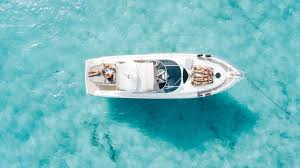
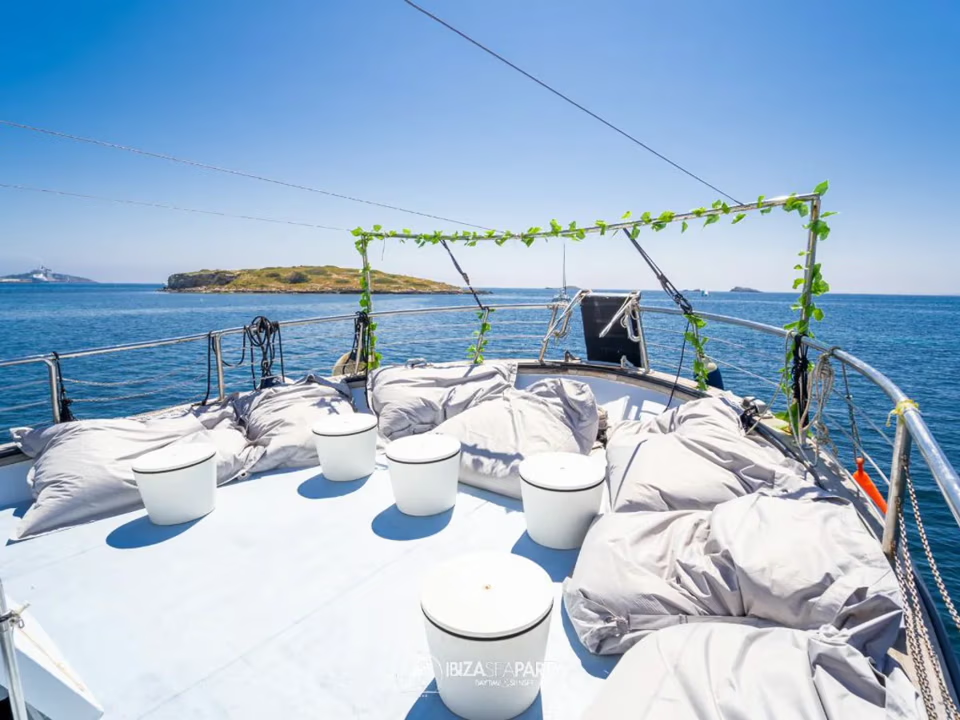
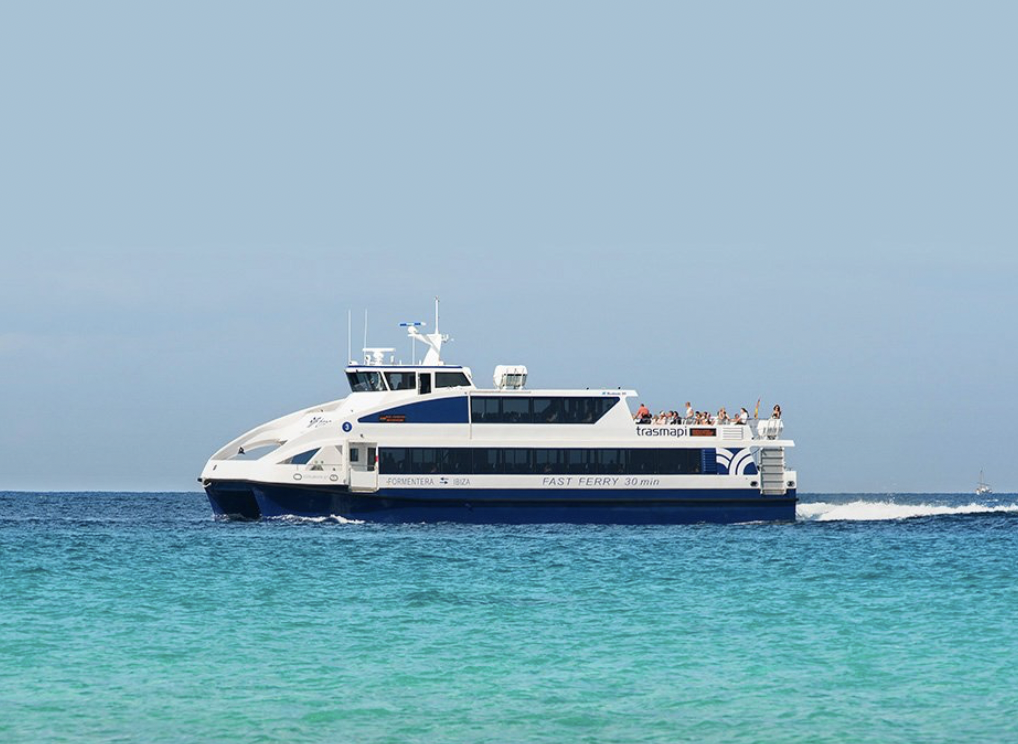
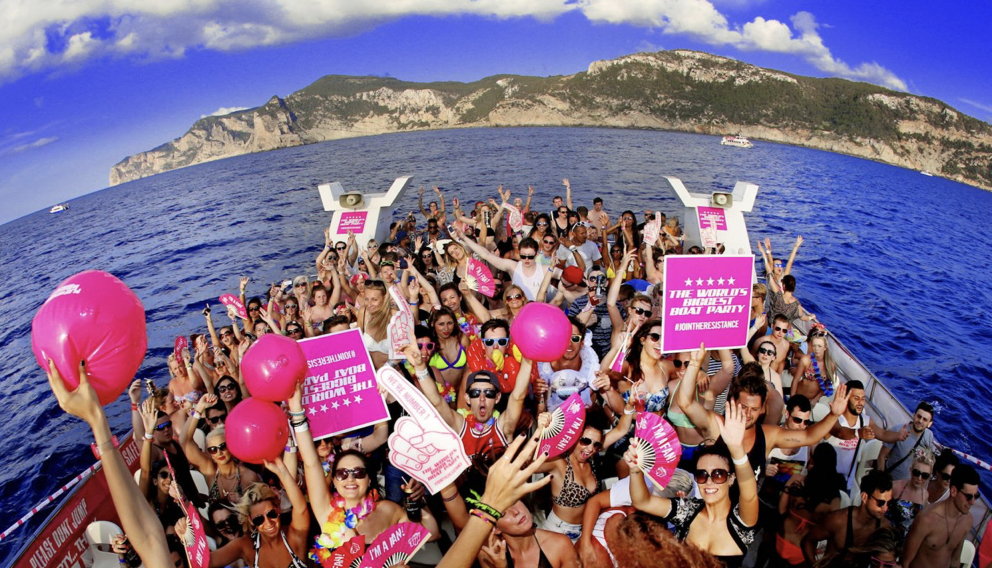
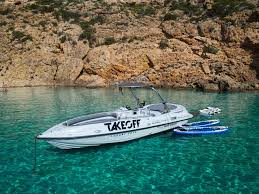
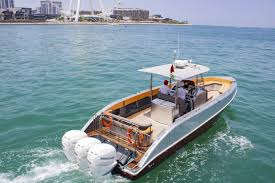
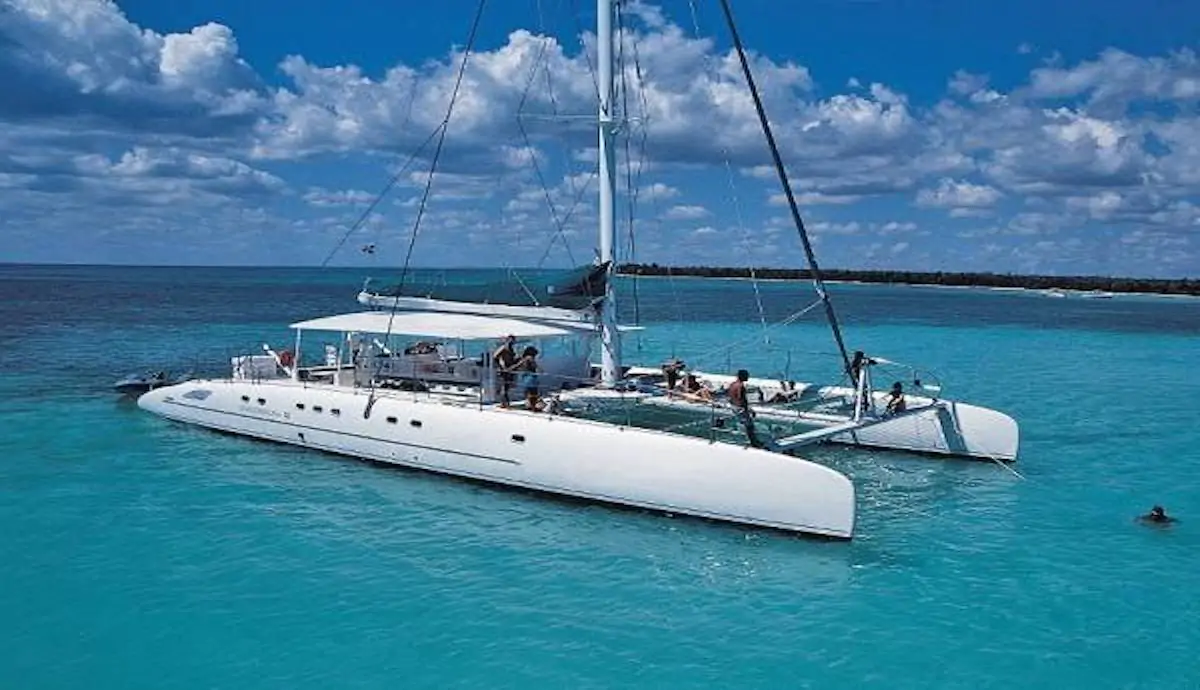
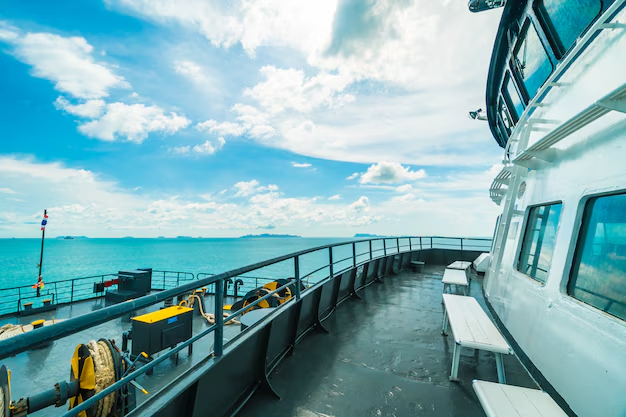
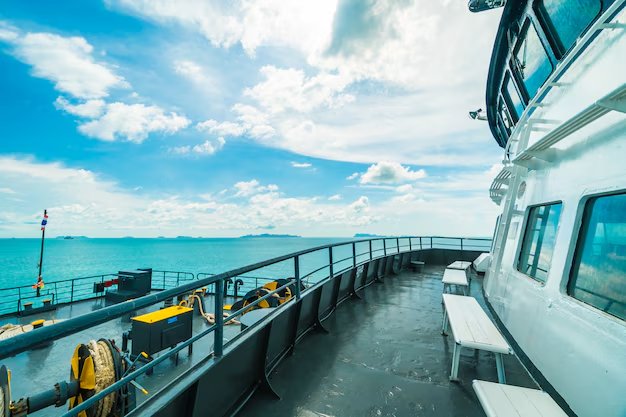
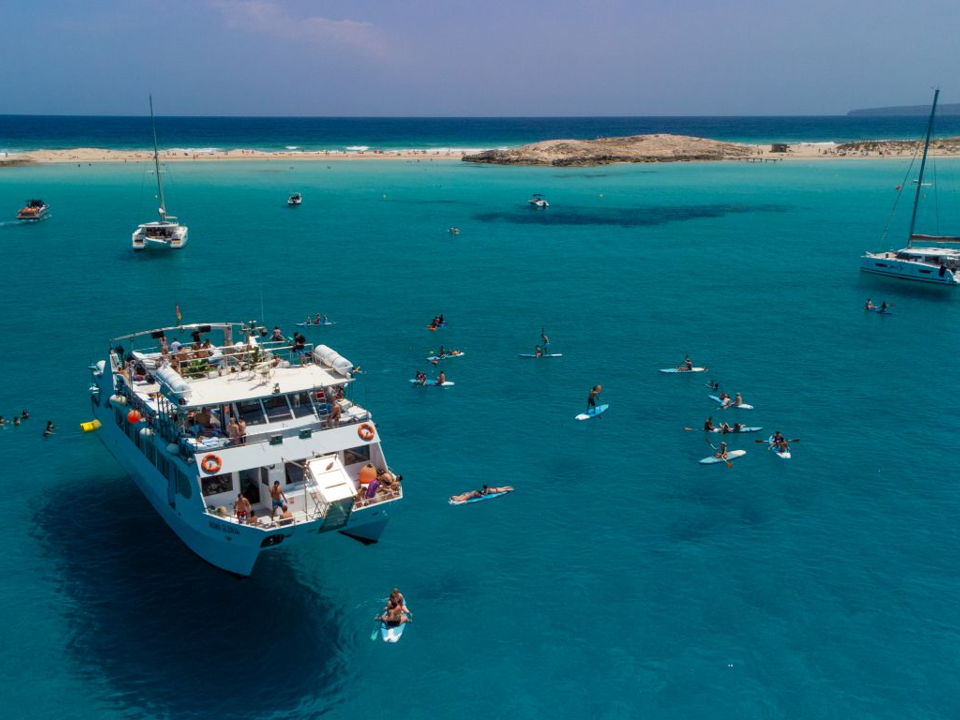
The boat trips from Ibiza provide another way to enjoy the coastline and take ordinary photographs from the deck. Compare the route and departure point with the landscapes you want to see, and check what the selected trip includes.
Choose the Clubtickets experience for the day on the water itself. A particular route doesn’t promise a specific camera angle, a landing at every cove or permission to fly from the boat. Ask the operator about photography and equipment arrangements before bringing a large kit.
Choose an outing that fits your interests
Island tours and excursions can add variety when you’d like a day organised around seeing more of Ibiza. Read the actual stops and timing instead of assuming every scenic tour has time for a separate photography project.
Clubtickets helps with comparing the outing, while the operator decides its programme and equipment policy. If you need a dedicated photographic itinerary or professional production arrangements, establish those requirements directly rather than expecting a standard ticket to provide them.
Leave time for the holiday around the pictures
Pick an evening you’re looking forward to from the Ibiza events calendar, then keep the afternoon comfortable enough to return, eat and get ready. There’s no need to schedule a remote coastal outing immediately before a timed admission.
Clubtickets can help you secure the event that matters most. For a longer stay, a one-week Ibiza itinerary offers ideas to spread sightseeing, beach time and nights out across the trip. Swap plans in rather than trying to fit two full itineraries into one week.
Keep the booking and flight arrangements separate
Clubtickets bookings cover the event or activity described by the selected product. They don’t provide drone-operation authorisations, environmental approvals or permission to film other guests.
Confirm the experience details, then complete any separate photographic arrangements with the appropriate people. That leaves you free to enjoy a boat day, a tour or an evening out without depending on an aerial shot to make it worthwhile.
Conclusion
Ibiza’s coast and historic places offer plenty of photographic ideas, but the best image starts with a location and plan that work for the day. Research permissions, keep the composition simple and be ready to enjoy a ground-level perspective.
Use Clubtickets for the experiences you want around the photography, and leave time to put the camera down too. A memorable afternoon on the island is still a good result when the drone never leaves its bag.
Frequently Asked Questions (FAQs)
Are these 12 locations approved drone-flying sites?
No. They are photographic subjects to research. Check the full proposed flight area, applicable rules, environmental requirements, land access and any required authorisations before operating.
Can you fly a camera drone under 250 grams without registering?
Not automatically. Camera-equipped drones can require operator registration even below 250 grams, with specific exceptions such as qualifying toys. Check the rules for your equipment and registration circumstances.
Where can you check Ibiza’s drone restrictions?
Use the official ENAIRE Drones map and read the conditions for the relevant zones. Check environmental and property requirements separately, and complete any necessary coordination or permission process.
Can you fly towards Es Vedrà from a viewpoint?
Don’t assume so. The protected islets, surrounding area and proposed route need assessment. Being able to see the landmark, or seeing somebody else’s footage, doesn’t establish permission for your flight.
Is the height limit measured from the launch point?
For an ordinary open-category operation, the general limit relates to the closest point of the earth’s surface, normally 120 metres, rather than simply your launch elevation. More restrictive local conditions can apply.
Are night drone flights always illegal in Ibiza?
There isn’t a blanket answer based only on the time of day. Night operations have their own applicable requirements, and local restrictions still matter. Check the current conditions before planning one.
Can you launch a drone during a boat trip?
A standard boat-trip booking doesn’t authorise it. Operator permission, a suitable operation and every relevant aviation and environmental condition would need to be addressed separately. Ordinary deck photography may be the better plan.
When is the best time for photography in Ibiza?
It depends on the subject and the effect you want. Morning and later light can suit texture and atmosphere, while brighter conditions can emphasise water colour. Good photographic light doesn’t guarantee suitable conditions for flying.